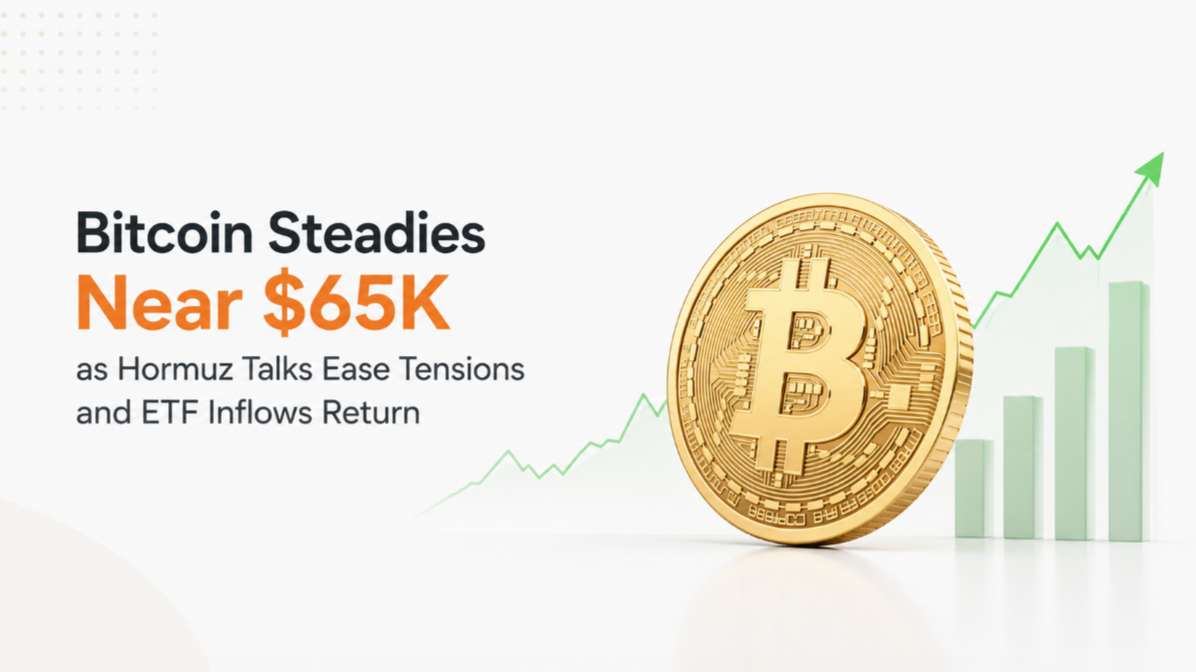
Bitcoin Steadies Near $65K as Hormuz Talks Ease Tensions and ETF Inflows Return
Bitcoin Firms Up as Geopolitical Pressure Eases
Bitcoin opened the day on solid footing, trading near $64,800 and up roughly 0.8% over the previous 24 hours. The move comes as ongoing negotiations concerning the Strait of Hormuz appear to be de-escalating, easing pressure on oil prices and, by extension, on broader risk assets like cryptocurrency. A weaker-than-expected ADP employment report added to the mix, reinforcing expectations that the Federal Reserve may have more room to ease policy — a dynamic that has historically supported Bitcoin's price action. Notably, Bitcoin's correlation with the Dow Jones Industrial Average has climbed to roughly 58%, underscoring how closely the asset is now tracking traditional macro sentiment.
Institutional ETF Demand Provides a Fresh Tailwind
Beyond the macro backdrop, institutional appetite for Bitcoin exposure through regulated products is playing an outsized role. Spot Bitcoin ETFs logged $211 million in net inflows on the day, with BlackRock's IBIT alone responsible for more than $170 million of that total — a sign that large allocators continue treating Bitcoin ETFs as a preferred entry point. This steady absorption of supply through ETF channels has helped Bitcoin outperform much of the wider digital asset market in recent sessions, even as investor attention remains split between price action and pending US crypto legislation, including the proposed American Reserve Modernization Act.
Broader Market Picture: Gains Amid Caution
Zooming out, the total cryptocurrency market capitalization stands at approximately $2.29 trillion, up 0.9% over the past 24 hours, with roughly $57 billion in trading volume. Bitcoin's dominance remains strong at 56.5%, with Ethereum holding around 10% of the market. Despite the headline gains, sentiment indicators point to continued caution: the Fear & Greed Index remains in "Extreme Fear" territory, stablecoin market activity slipped 5% to a $301.9 billion capitalization, and the DeFi sector saw a sharp 38.7% drop in market cap over the same period — a signal that capital is rotating away from higher-risk decentralized protocols even as core assets like Bitcoin hold their ground.
What It Means for Traders
The combination of easing geopolitical risk, a softer labor market print, and consistent ETF-driven demand paints a cautiously constructive picture for Bitcoin in the near term. However, the sharp pullback in DeFi and declining stablecoin activity suggest that risk appetite across the broader crypto ecosystem remains uneven. Traders will likely keep a close eye on upcoming Fed commentary, ETF flow data, and any further developments on the geopolitical front as key catalysts for where Bitcoin — and the wider market — heads next.