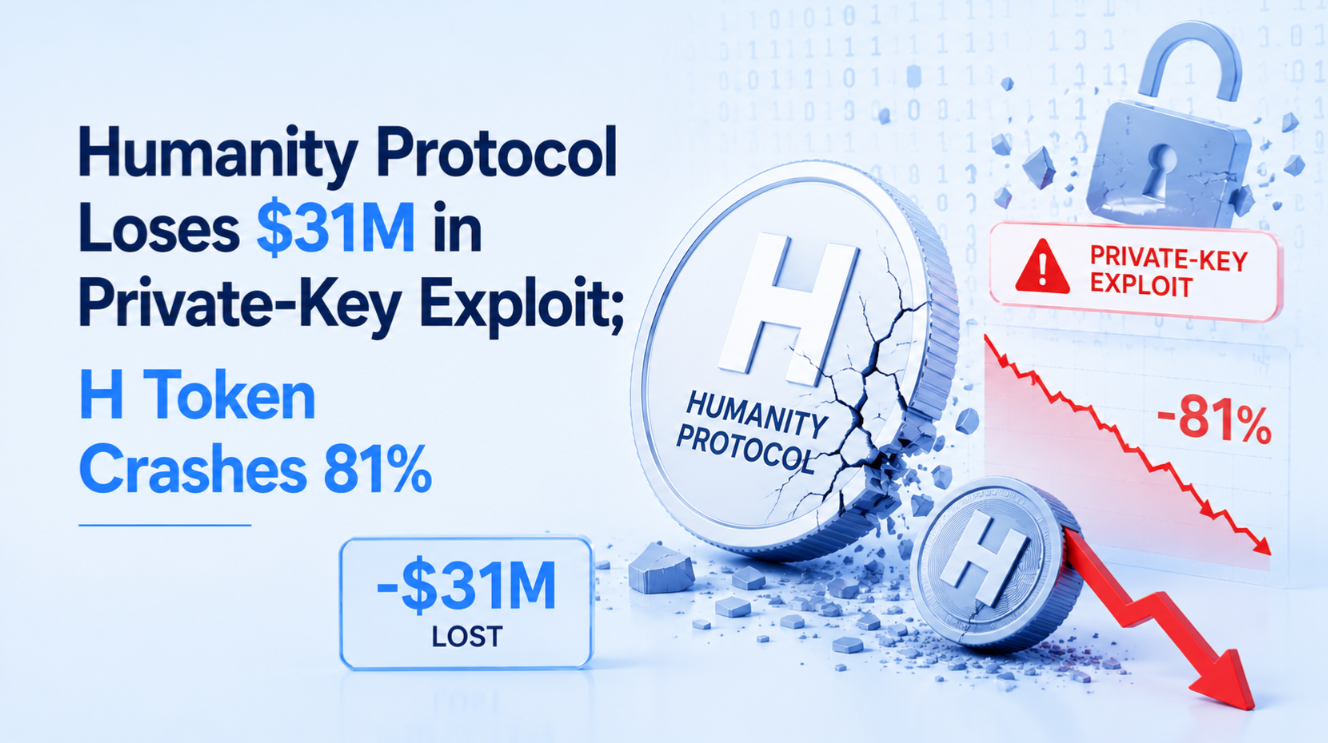
The identity‑focused network Humanity Protocol suffered an administrative breach on June 9, 2026 that resulted in financial losses exceeding $31 million. Attackers compromised private keys that had been backed up to a malware‑infected developer machine, then drained multiple linked ecosystem wallets and the protocol’s core token admin multisig.
The H token crashed by more than 81% following disclosure, falling from around $0.708 to $0.135 within hours.
How the compromise happened
Post‑incident reporting from Halborn and Quantstamp identified the attack path as a targeted private‑key leakage rather than a smart‑contract exploit. Backup material for administrative keys had been stored on a developer workstation infected with information‑stealing malware. Once attackers held the private keys they operated inside the protocol’s authorized permissions.
Quantstamp reported that the tooling and techniques observed were consistent with those commonly attributed to North Korean threat actors.
The recurring pattern
The Humanity Protocol breach is not an outlier. Multiple incidents in the past twenty‑four months — including bridge exploits and treasury drains at other DeFi projects — have traced back to compromised developer endpoints rather than logic bugs in on‑chain code. Every operator‑controlled key that touches production is a supply‑chain vector, and cold storage of administrative backups is now the minimum bar, not a nice‑to‑have.