Coinbase Bets on AI Agents as Crypto Braces for Its Biggest Week Since Spring
Two very different clocks are running in crypto right now — one measured in years, the other in days — and this week they happen to be ticking at the same time.
On July 27, Coinbase CEO Brian Armstrong used a morning social media post to push back on a narrative he says he's heard for years: that crypto companies should eventually abandon their core business and pivot to artificial intelligence. His counter-argument was blunt — crypto isn't competing with AI, it's the plumbing AI will run on. Software agents, he argued, can't open bank accounts, can't wait days for a wire transfer, and don't recognize borders, so as autonomous programs start transacting at scale, they'll need money built for machines rather than humans. He wrapped that argument in a new brand for Coinbase's payments push: AiFi, short for Agentic Finance.
The idea isn't just a slogan. It rests on infrastructure Coinbase has spent over a year building, centered on a payment protocol called x402, which revives a long-dormant piece of internet plumbing — the HTTP "402 Payment Required" response — to let software agents settle instant stablecoin payments without logins or subscriptions. Paired with Coinbase's Base network and the USDC stablecoin, the stack now sits under neutral Linux Foundation governance and counts Google, Visa, Mastercard, Stripe, and Amazon among its backers. That's real institutional weight behind the thesis, but it cuts both ways: the same companies validating the category are also building competing versions of it, and Coinbase's early lead is no guarantee of staying power. The volume numbers underline the point — over 100 million x402 transactions have been recorded, but real economic activity behind them remains modest, with much of it reportedly still closer to testing than genuine commerce.
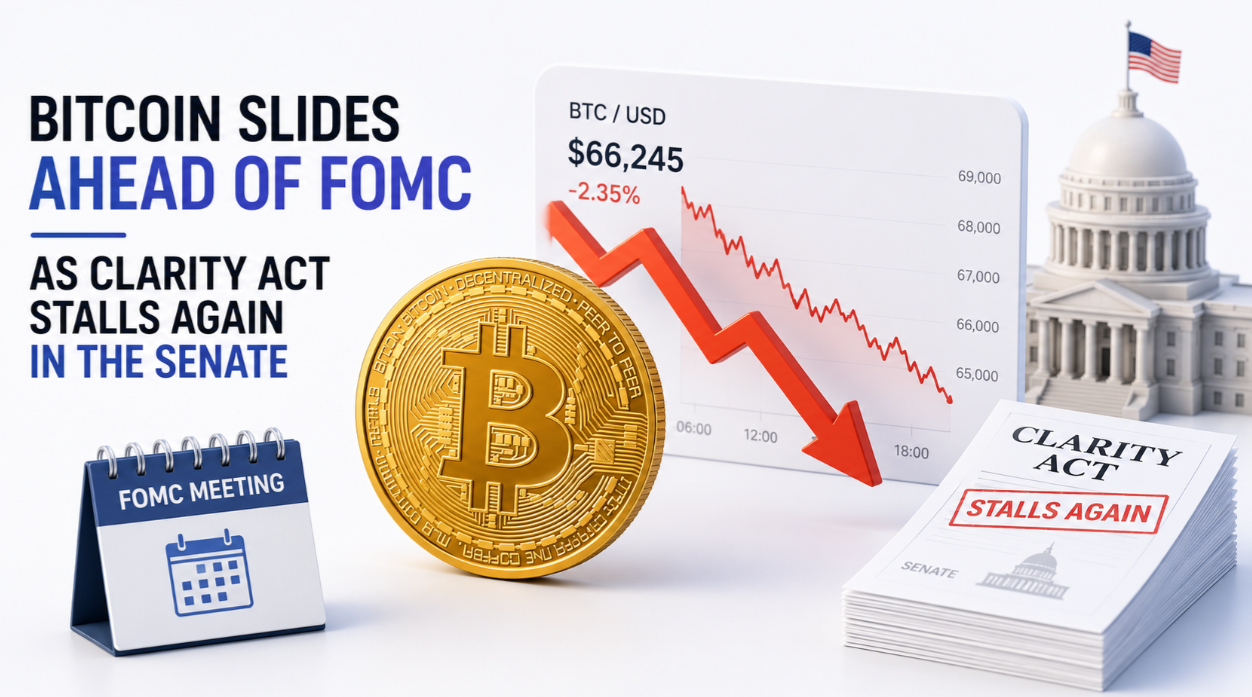
That long-horizon bet lands in the middle of a much shorter-term storm. The week of July 27 to August 2 is shaping up as crypto's busiest stretch since spring, anchored by the Federal Reserve's rate decision on Wednesday. No change to the current 3.50–3.75% range is expected, but this meeting comes without updated economic projections or a "dot plot," meaning the entire signal for where rates go next will come from Chair Kevin Warsh's tone alone — the only real hint markets get before September. Bitcoin has spent recent sessions consolidating in the mid-$64,000s, with sentiment gauges sitting in the cautious, wait-and-see zone typical of a pre-Fed market.
Earnings add another layer directly relevant to crypto. Coinbase and Strategy — the latter still holding roughly 843,000 Bitcoin worth an estimated $54 billion — both report Thursday, offering a read on US trading activity, stablecoin revenue, and balance-sheet strain, while Robinhood reports a day earlier. Inflation data compounds the picture, with the Fed's preferred gauge, core PCE, landing Friday — close enough to Warsh's remarks to either reinforce or undercut whatever tone he strikes.
Underneath all of it sits a regulatory deadline with no fixed date but a hard limit. The Senate leaves for its August recess around August 7, making this the last realistic week for the CLARITY Act — the market-structure bill the industry has lobbied for over the past year — to build momentum toward a floor vote. The bill remains stalled over ethics-enforcement provisions, and prediction markets currently put its odds of passing in 2026 at roughly one in three. The Senate's own majority leader has already suggested a vote won't happen before the break, which would leave US crypto firms operating without clear statutory rules for months longer.
Taken together, the week captures something true about crypto right now: a genuine long-term infrastructure bet from one of the industry's largest companies, playing out against a backdrop of short-term macro and political uncertainty that could move prices well before anyone finds out whether AI agents actually start spending real money at scale.