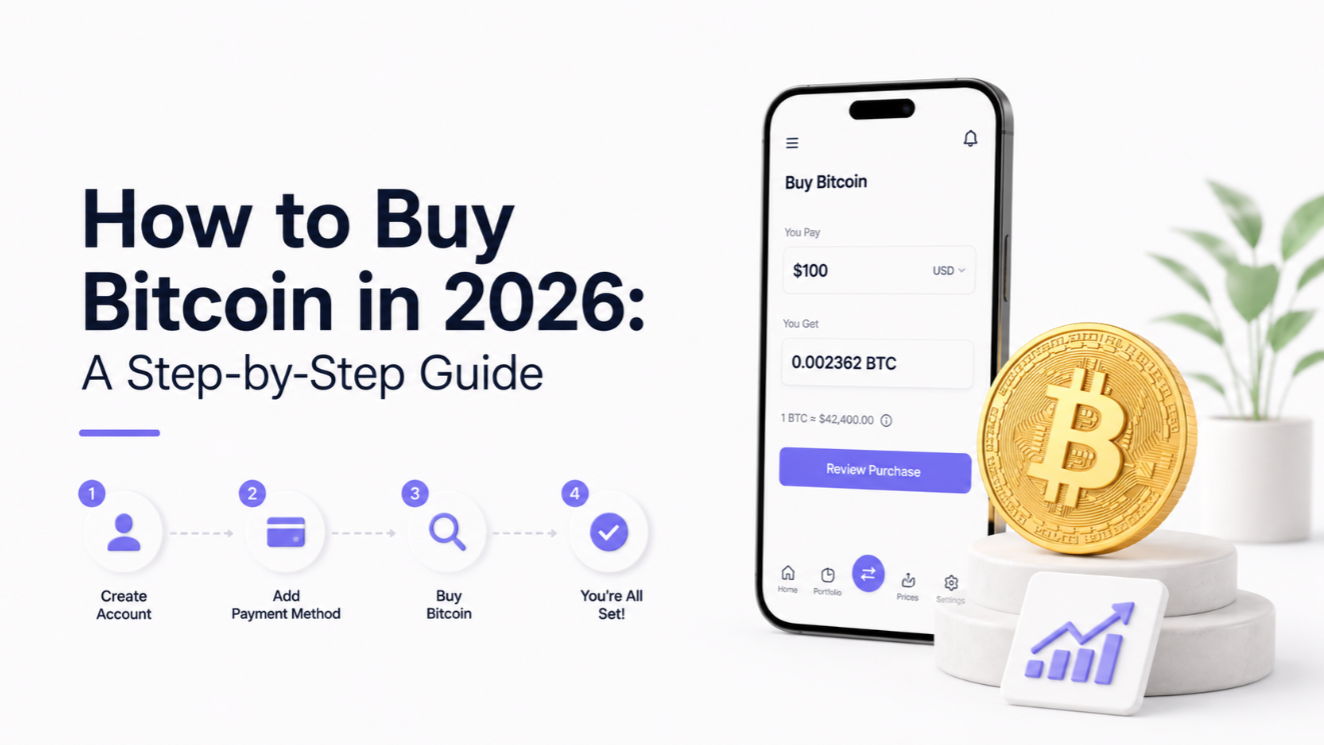
Buying Bitcoin in 2026 is easier than ever, but the steps still matter. This guide takes you from a blank screen to BTC in a wallet you actually control — and avoids the rookie mistakes that cost beginners real money.
Step 1: Pick a regulated exchange
Stick with platforms that publish proof of reserves, hold local licenses (MiCA in the EU, NYDFS BitLicense in NY, MAS in Singapore), and offer two-factor authentication. Solid 2026 choices include Coinbase, Kraken, Bitstamp, and Binance in supported regions. Compare withdrawal fees and spread before you sign up.
Step 2: Complete KYC properly
You will need a government ID and a selfie. Use your real name and address. Failing KYC later — when you try to withdraw a large amount — is one of the most common traps. Set up app-based 2FA (Authy or Google Authenticator). Skip SMS 2FA if the exchange supports a TOTP option.
Step 3: Fund your account
SEPA, ACH, and Faster Payments are usually free or under $1. Card purchases are instant but cost 1.5–3.9% extra. For amounts above $500, bank transfer is almost always the right move.
Step 4: Place your first order
- Market order — buys instantly at the best available price; simplest for small amounts.
- Limit order — buys only at a price you set; better for amounts above $1,000.
- Recurring buy (DCA) — automated weekly or monthly purchases that smooth out volatility.
Step 5: Move BTC to a wallet you control
Leaving BTC on an exchange means trusting the company. Once you have more than ~$1,000, withdraw to a hardware wallet (Ledger, Trezor, SafePal) or a reputable software wallet. Always send a small test amount first.
Common beginner mistakes
- Pasting the wrong wallet address — always verify the first and last 6 characters.
- Using SMS 2FA instead of a TOTP app, leaving you exposed to SIM-swap attacks.
- Buying on credit cards — fees plus interest can eat 5%+ of your purchase.
- Skipping the test transaction before sending a large amount.
For live Bitcoin price and market data, see our Bitcoin market page. Want to skip exchanges entirely? Read our guide on self-custody for beginners.