NFT buying in 2026 is no longer a coin-flip on hype tokens. Compressed mints on Solana cost cents, Ethereum collections settle on L2s, and most reputable marketplaces have built-in scam detection. Here is the modern, calm version of the process.
Step 1: Pick the right chain
- Ethereum + L2s — Blue-chip art and PFP collections (CryptoPunks, Pudgy Penguins, Azuki). Use Base or Arbitrum for low fees.
- Solana — Cheap compressed mints, generative art, and gaming assets. Magic Eden and Tensor lead by volume.
- Bitcoin — Ordinals and Runes. Higher technical bar but a strong cultural niche.
Step 2: Set up the matching wallet
MetaMask or Rabby for EVM, Phantom or Backpack for Solana, Sparrow + Magic Eden Wallet for Bitcoin. Fund it with a small buffer of the native token for gas (0.005 ETH is plenty on L2s, 0.05 SOL on Solana).
Step 3: Buy on a reputable marketplace
In 2026, the safe defaults are OpenSea (Ethereum + Base), Magic Eden (cross-chain), Tensor (Solana), and Blur (Ethereum, pro traders). Always check the collection's verified badge and Twitter handle before connecting your wallet.
Step 4: Read the listing carefully
- Royalty %: most marketplaces enforce creator royalties again in 2026 — typically 5–7%.
- Floor price vs. listed price: floor is the cheapest item; listed is what you pay.
- Rarity rank: traits affect resale price, sometimes by 10×.
- Bid vs. buy now: bidding takes time but can save 5–20%.
Step 5: Confirm and verify
Read the wallet pop-up before signing. A purchase should request a single token transfer, not infinite approval for your entire wallet. If unsure, cancel and ask in the project Discord — never in DMs.
After the purchase
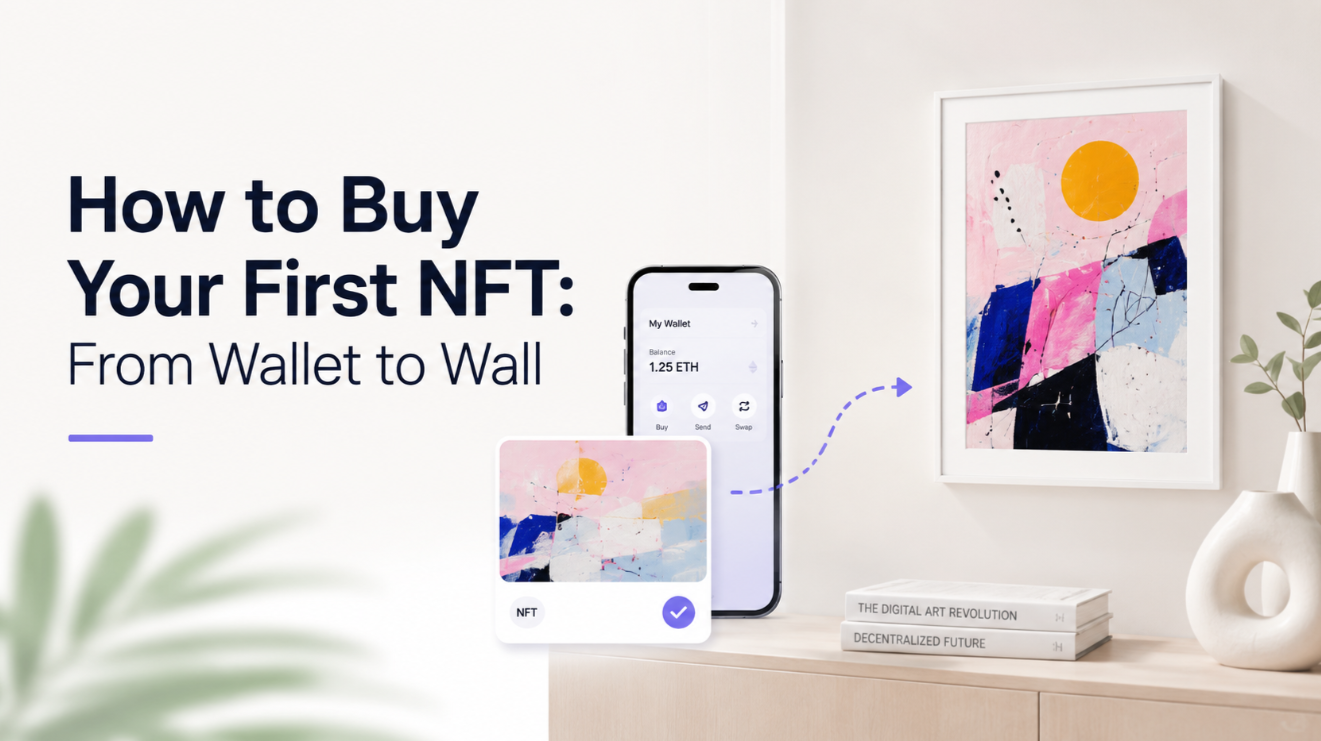
Your NFT shows up in the wallet automatically. If it does not, refresh the marketplace or check on Etherscan / Solscan. For long-term storage, move expensive pieces to a hardware wallet — Ledger and SafePal support both Ethereum and Solana NFTs.
Want to go deeper? Compare marketplaces in our NFT marketplaces guide and learn how to avoid NFT scams.