EIP-4844 blobs cut L2 fees by 10× in 2024. EIP-7702 made smart-account flows cheaper in 2025. Ethereum L1 gas remains expensive at peak demand. Here is how to keep costs reasonable in 2026.
Tactic 1: Default to L2s
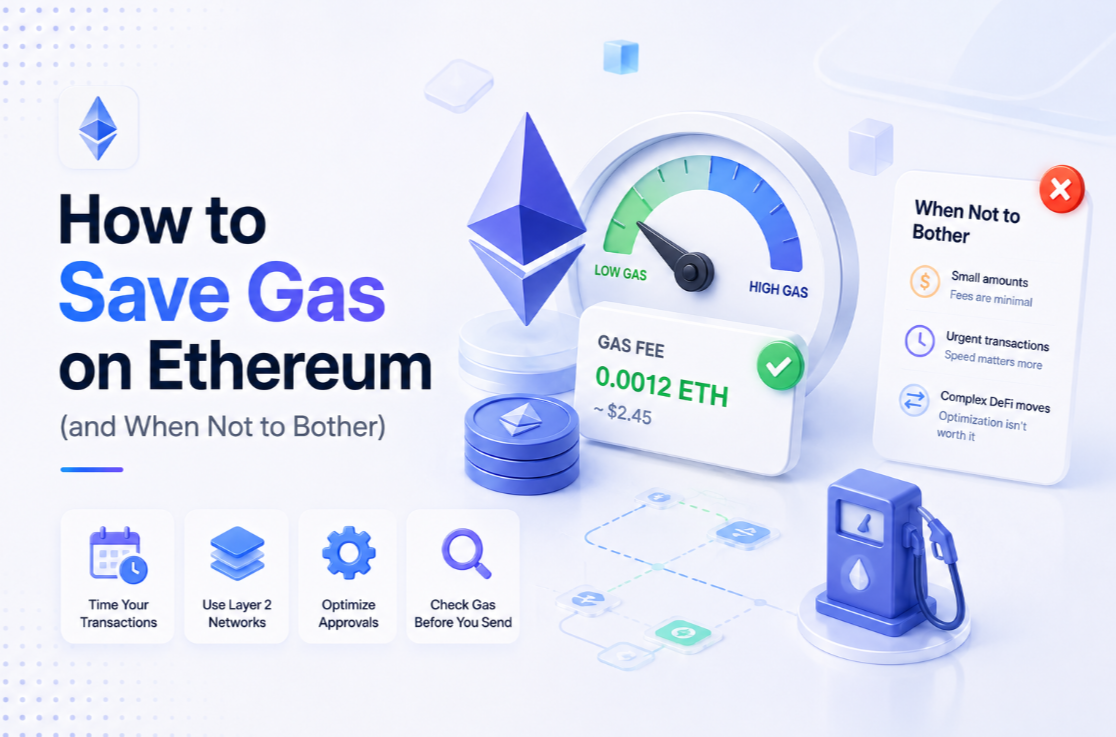
For 95% of transactions — swaps, transfers, NFT mints, DeFi — Arbitrum, Base, Optimism, or zkSync cost cents instead of dollars. Bridge once, transact dozens of times. The L1 gas savings cover the bridge cost within a few transactions.
Tactic 2: Batch transactions
Wallets supporting ERC-4337 account abstraction (Argent, Safe, Biconomy) bundle multiple actions into a single transaction. Approving and swapping in one shot saves ~30% gas vs. two transactions.
Tactic 3: Time the network
Ethereum gas on L1 follows predictable rhythms: cheapest 02:00–07:00 UTC Sundays, most expensive 14:00–22:00 UTC weekdays. Tools like ethgasstation.info, etherscan.io/gastracker, and the GasHawk scheduler queue transactions for cheap slots.
Tactic 4: Use limit orders
Limit orders on Uniswap, CoW Swap, and 1inch execute via solvers when the price is met. You pay no gas for the limit creation; the solver pays gas at execution and competes for your order, often returning surplus to you.
Tactic 5: Use MEV-protected routes
Flashbots Protect, MEV Blocker, and CoW's solver layer route your transactions through private mempools, preventing sandwich attacks. The protection is free and often saves more than the gas itself on larger trades.
When NOT to optimise
- You are sending less than $50 — gas optimisation rarely beats the time cost.
- Time-sensitive trades — chasing cheap blocks costs you fills.
- Critical operations (liquidation defense, vault exits) — pay the gas and act fast.
- Bridge fees — chasing cheaper bridges can introduce trust or fragmentation risk.
The 2026 reality
L1 transactions averaged 8–25 gwei in 2026, with occasional spikes during high-volume events. L2 fees rarely exceed $0.10 even at peak. For most users, "gas optimisation" in 2026 simply means staying on L2 by default.
For deeper L2 details, see our Layer 2 networks comparison and our crypto bridges 101.