Ronin's 2024–2026 comeback is the most successful turnaround story in crypto gaming. Sky Mavis — the Axie Infinity team — pivoted Ronin from "Axie's chain" to a serious EVM L2 dedicated to consumer games. The strategy worked.
Why Ronin works for games
- Gas-sponsored transactions — Players never need to think about gas.
- Console-style UX — Wallet abstraction makes games feel like normal games.
- Dedicated gaming focus — Validators and tools optimised for game state.
- Strong portfolio — Multiple successful titles, not a single hit.
The 2026 game lineup
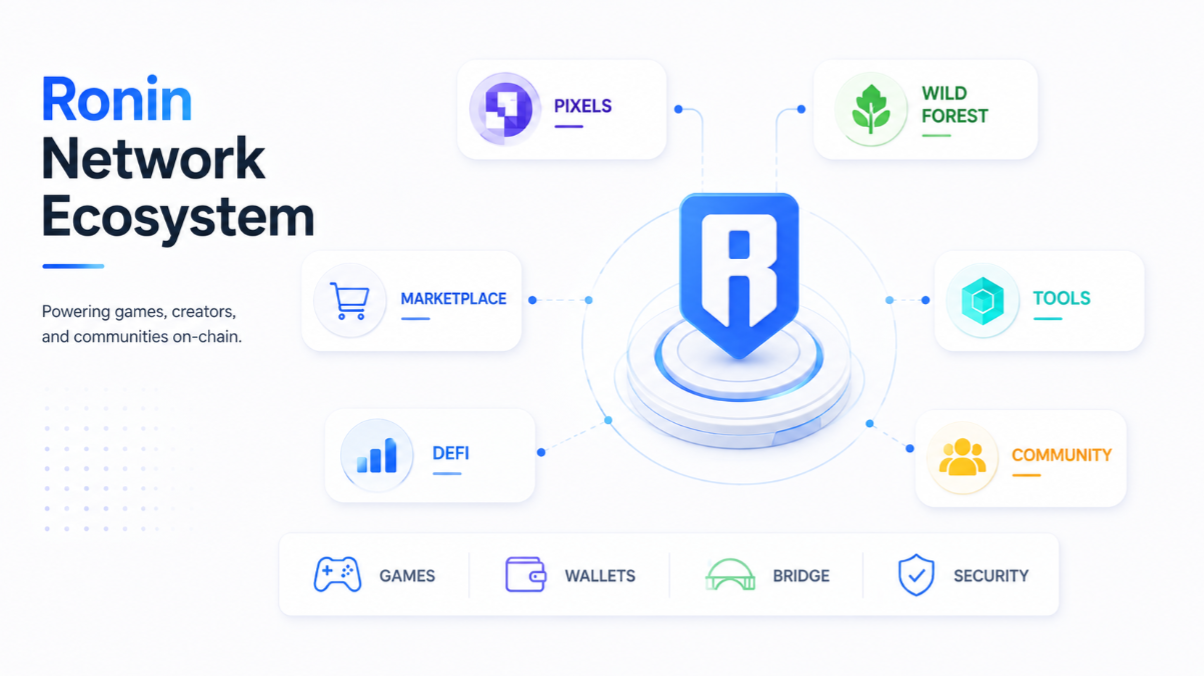
- Pixels — Cozy farming MMO with 800k+ DAU peak.
- Wild Forest — Auto-battler with deep card mechanics.
- Lumiterra — Open-world survival MMO.
- Ragnarok Landverse — Korean MMO veteran with on-chain assets.
- Apeiron — God game with Pokémon-style monster collection.
- Sky Mavis Pixel Tactics — Auto-chess from the Axie team.
RON tokenomics
RON is Ronin's native gas token and validator stake. Gas sponsorship is funded by RON treasury allocations. Token captures network growth through gas demand. Strong correlation between game launches and RON usage.
Where Ronin sits in the L2 landscape
Ronin is not in the top 10 Ethereum L2s by TVL or financial DeFi activity. But by consumer DAU and game-related transaction volume, it is competitive with much larger chains. The "what does the chain do" question matters more than headline TVL.
Risks
- Concentrated in gaming — sector-specific risks compound.
- Sky Mavis dominates the chain — both validation and game development.
- Past Ronin bridge hack (2022) is a reputational shadow.
See our top crypto games 2026 and the GameFi sector deep-dive.