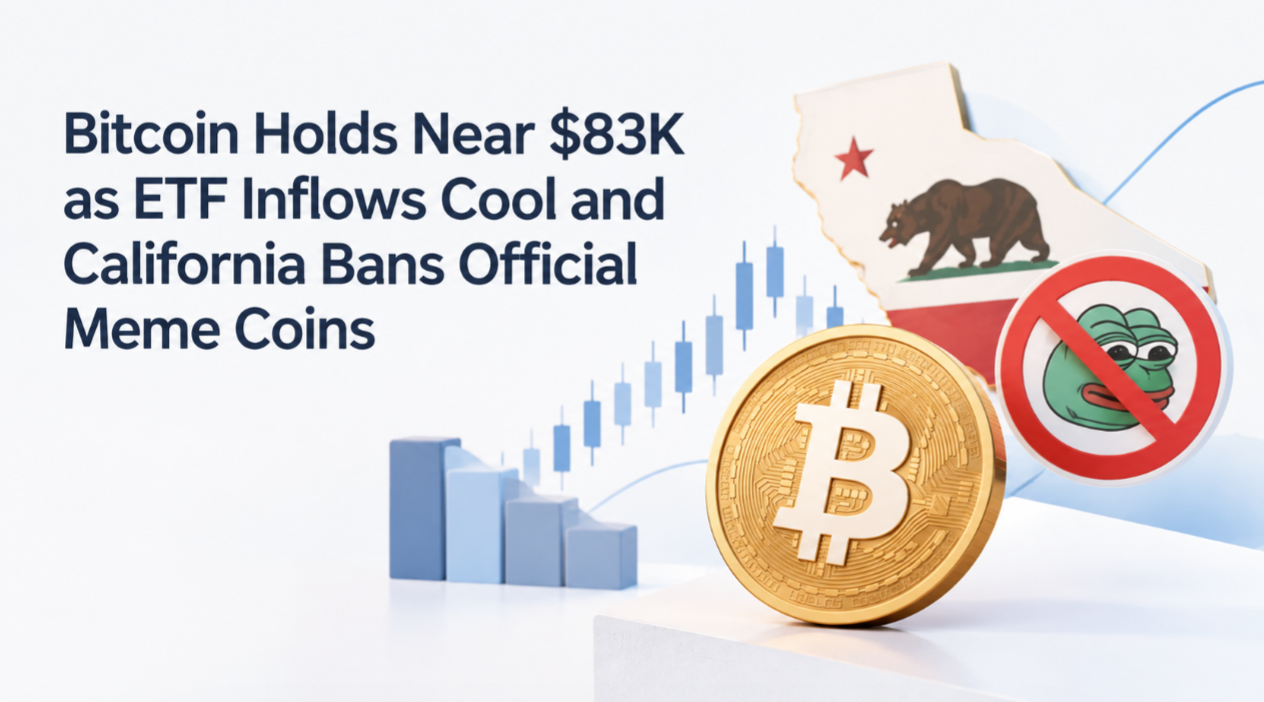
Bitcoin spent Monday and early Tuesday pinned near $83,000, slipping as low as roughly $82,500 before rebounding above $84,000 on September 29. Elevated Treasury yields and high oil prices continue to weigh on risk assets, even as US regulators and lawmakers keep reshaping the rules of the crypto market.
Bitcoin Holds the Line as Macro Pressure Builds
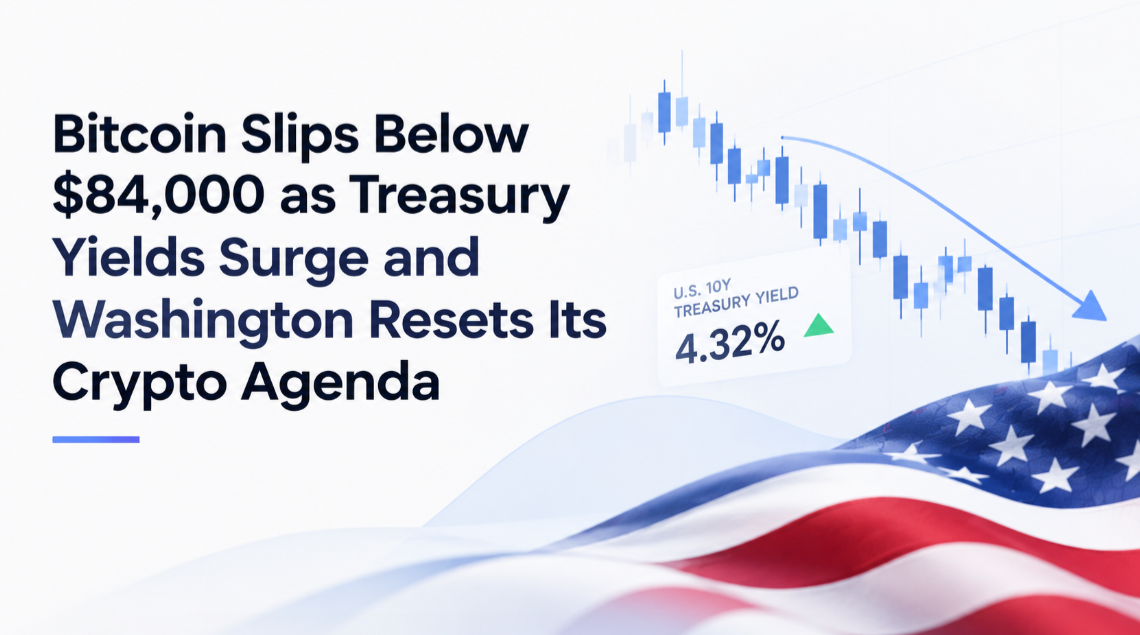
Bitcoin closed Monday near $83,500, down about 1% on the day. The move was driven more by macroeconomic forces than by anything crypto-specific. The yield on the benchmark 10-year US Treasury climbed to its highest level since 2007 on Monday and has since steadied near 5.25%. Higher yields make non-yielding assets like Bitcoin less attractive to some investors.
Oil is adding to the pressure. Federal Reserve Governor Lisa Cook said this week that higher energy prices will keep feeding inflation, which has fueled speculation about further tightening. Traders are now watching Wednesday's core PCE inflation reading, which could decide whether Bitcoin breaks out of its $83,000–$85,000 range.
ETF Demand Cools but Stays Positive
US spot Bitcoin ETFs recorded roughly $31 million in net inflows on September 28, extending their inflow streak to eight consecutive trading days. BlackRock's IBIT led with about $54.8 million, while Grayscale's GBTC and Fidelity's FBTC saw outflows of about $23.2 million and $10.9 million, respectively.
The daily total is a fraction of the roughly $1 billion that flowed in on September 21, a sign that momentum is fading. Over the past five sessions, however, the funds have still attracted about $2.4 billion, and that steady demand has helped absorb selling on dips. Spot Ether ETFs added about $17 million on Monday, while Solana- and XRP-linked products together drew roughly the same amount.
California Bans Meme Coins Issued by Public Officials
On Sunday, California Governor Gavin Newsom signed Assembly Bill 2409, which prohibits public officials in the state from issuing meme coins. The law also bars digital asset service providers from offering California residents meme coins issued by or in partnership with public officials, or using their likeness, when those tokens are issued on or after January 1, 2027. Enforcement can come through civil actions filed by the state attorney general, district attorneys, city attorneys or county counsel.
The measure was one of 11 bills in an accountability package. Another, Senate Bill 1208, expands California's money laundering rules to cover digital assets and allows law enforcement to freeze, seize and forfeit crypto linked to crimes. The governor's office framed the package as a response to concerns about officials profiting from their positions, citing President Donald Trump's meme coin.
What This Means for the US Crypto Market
Together, the two stories show a market caught between strong institutional access and tightening oversight. ETF flows show that traditional investors are still buying, but at a slower pace, while state-level rules such as California's could push exchanges and token issuers to build compliance checks into their listing processes.
In the short term, Bitcoin's direction depends on inflation data and bond yields. A softer PCE reading could ease pressure on risk assets, while a hot number may test support near $83,000. This article is for informational purposes only and is not financial advice.