Two developments out of Washington on Friday, September 25, give a clear picture of where US crypto oversight stands: a key regulatory voice is leaving the SEC, and a federal court has widened the fight over who controls prediction markets.
Hester Peirce Sets an October 2 Exit
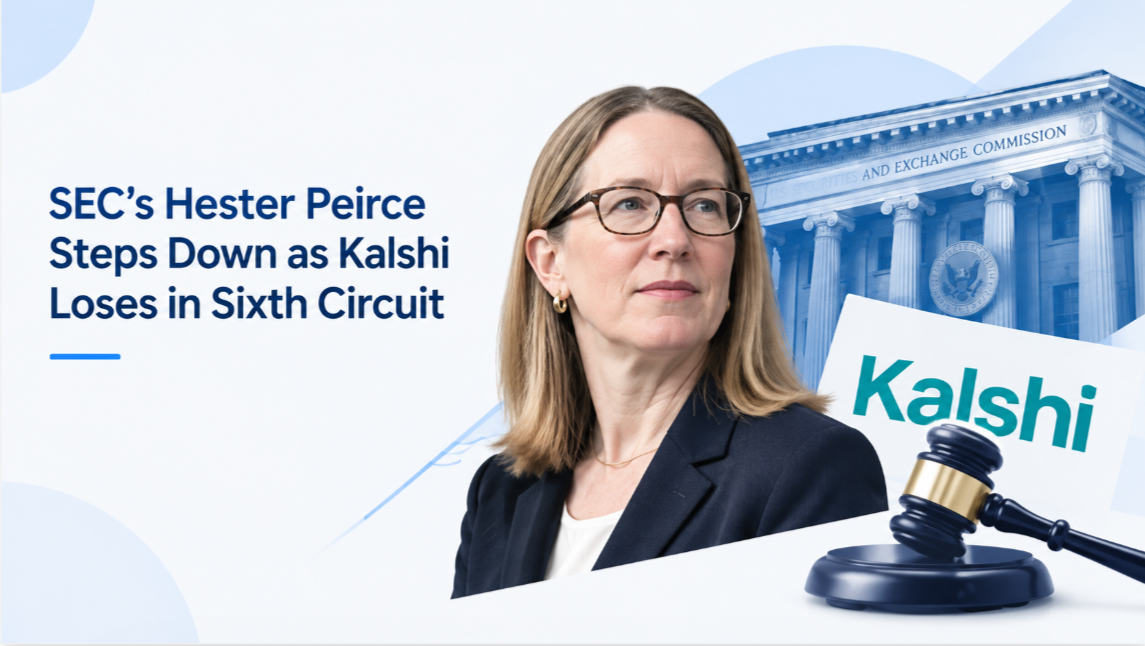
SEC Commissioner Hester Peirce, widely known in the industry as "Crypto Mom," posted her resignation letter on Friday. Her departure takes effect on October 2, ending a tenure that began in January 2018. She will join the Regent University School of Law as an associate professor in November.
Peirce led the agency's Crypto Task Force and pushed for clear, rules-based oversight instead of enforcement-first policy. Her exit leaves the five-seat commission with only two members, Chairman Paul Atkins and Commissioner Mark Uyeda, both Republicans. Under agency quorum rules, the remaining commissioners can still act, so pending work is not automatically frozen.
Rulemaking Continues Without Her
The timing matters. The SEC's proposed Regulation Crypto Assets would create a startup exemption of up to $5 million over four years and a fundraising exemption of up to $75 million in each 12-month period, while keeping federal antifraud rules in place. It would also give tokens a path to stop being treated as investment contracts once certain managerial efforts end. The public comment period closes on October 20, so Peirce will leave before it ends.
Industry participants now hold more agency guidance than ever, but proposals and staff FAQs are less durable than statutes or final rules. That gap became more visible after the Senate failed to advance the CLARITY Act earlier this month.
Kalshi Loses Again in Federal Appeals Court
On the same day, a three-judge panel of the Sixth Circuit ruled unanimously that Ohio and Tennessee may apply their gambling laws to Kalshi's sports event contracts. The court found that Kalshi had not shown these contracts to be "swaps" under CFTC jurisdiction, and that federal law did not block state enforcement.
The decision reversed a preliminary injunction that had protected Kalshi in Tennessee and upheld the denial of similar relief in Ohio. It is not a final judgment on every claim, and Kalshi has said it does not expect the ruling to survive further review.
A Circuit Split Points Toward the Supreme Court
The Sixth Circuit follows the Ninth Circuit, which sided with Nevada on August 28. The Third Circuit went the other way in April, siding with Kalshi in a New Jersey case. With a petition already pending before the Supreme Court, the justices may ultimately decide whether sports contracts are swaps or sports bets. Until then, prediction market operators face different legal treatment from state to state.
What It Means for the Market
Bitcoin has traded mostly between $84,000 and $85,000, and US spot Bitcoin ETFs have logged inflows for seven straight sessions, so neither story has shaken prices. The bigger effect is on regulation. The industry is losing a friendly voice inside the SEC while prediction markets, a fast-growing corner of crypto, face a patchwork of state rules. Watch the October 20 comment deadline and any Supreme Court action on the Kalshi dispute.