A hardware wallet pays for itself the first time a hot wallet drainer hits your computer. Five devices dominate the 2026 market — here is how they actually compare.
Ledger Nano X / Stax / Flex
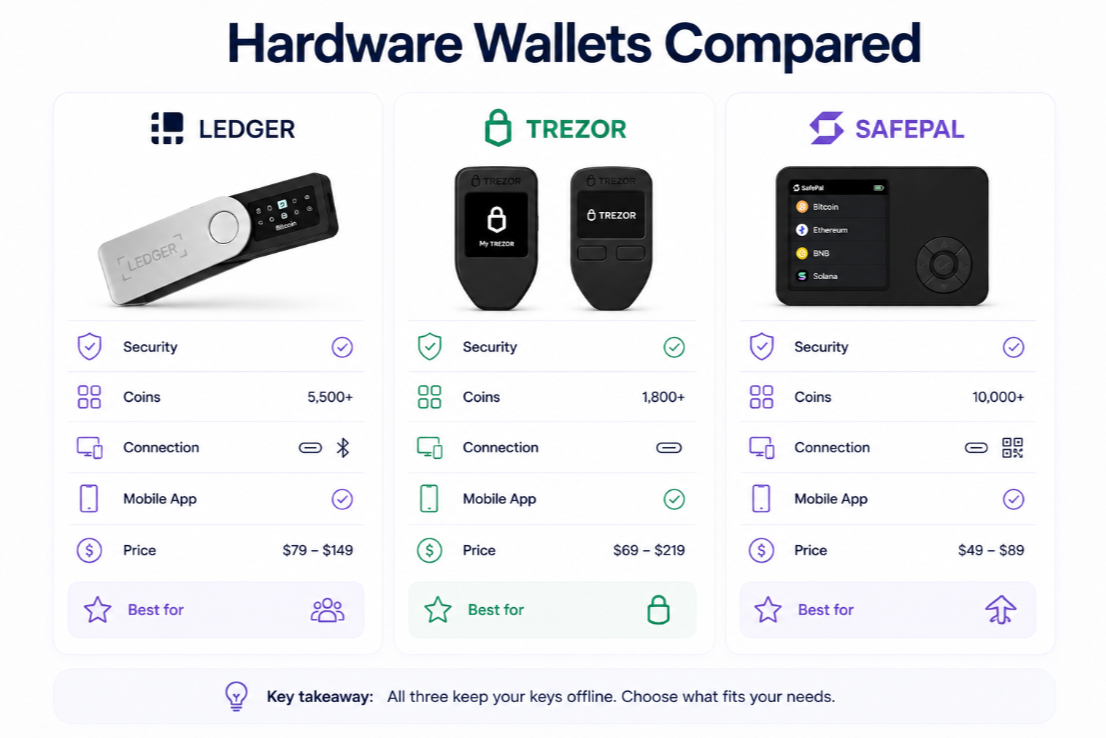
The most popular choice, with the deepest chain support (5,500+ coins) and the polished Ledger Live app. Stax and Flex add a touchscreen. The 2020 customer data leak left lasting reputational damage, and Ledger's "Recover" cloud-backup feature drew criticism in 2023. The secure element (ST33) remains best-in-class.
Trezor Safe 3 / Safe 5
Open-source firmware, Czech-made, with a strong security culture. The Safe 5 added a touchscreen and a secure element (a long-standing community request). Slightly fewer chains than Ledger but covers everything most users need. Best choice for users who want open-source hardware.
SafePal S1 Pro / X1
Air-gapped via QR code, fully offline, no USB or Bluetooth attack surface. At $80–130 it is the cheapest credible option. UX is more utilitarian than Ledger's. Supported by Binance ecosystem integrations.
Coldcard Mk4 / Q
Bitcoin-only, security-maxi favorite. Anti-phishing PIN, duress wallets, microSD-based signing flows. The Q adds a keyboard for passphrase entry. If you only hold BTC and value the highest security ceiling, this is the device.
Keystone 3 Pro
Air-gapped with a large touchscreen, fingerprint sensor, and three secure elements. The strongest "looks-and-feels-modern" device. Supports BTC, ETH, Solana, and most majors. Price ($150–200) sits between Trezor and Ledger flagship.
Quick comparison
- Cheapest credible — SafePal S1 Pro (~$80).
- Most chains — Ledger Nano X.
- Most open-source — Trezor Safe 3.
- Bitcoin maximum-security — Coldcard Q.
- Best touchscreen experience — Keystone 3 Pro.
Practical buying tips
- Always buy direct from the manufacturer — never Amazon, never eBay.
- Verify the tamper-evident packaging before opening.
- Generate the seed phrase on the device. Never accept a pre-generated seed.
- Update the firmware before transferring meaningful funds.
See our seed phrase storage guide and the Bitcoin self-custody guide for the full workflow.