EigenLayer was the first restaking protocol; it is no longer the only one. Symbiotic and Karak emerged in 2024 with different design choices. Each suits different operator and AVS preferences.
EigenLayer: the incumbent
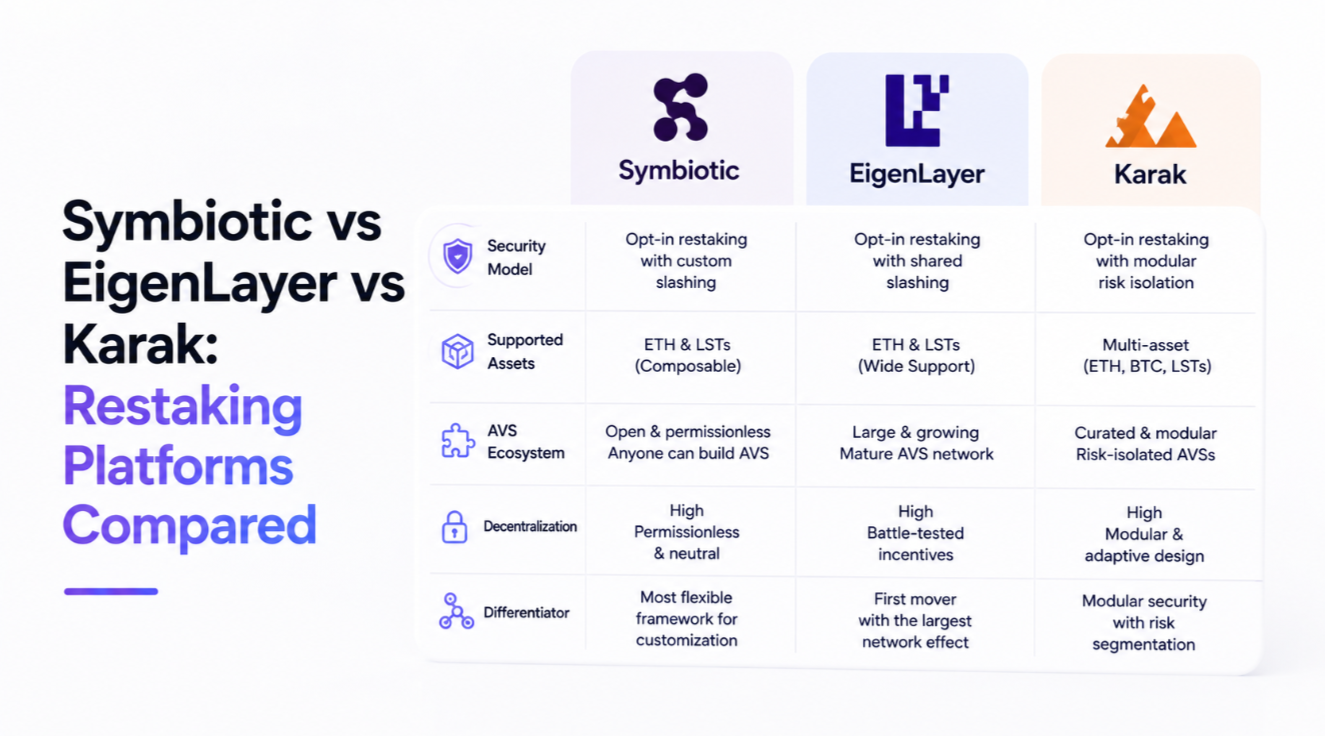
Native ETH and LST restaking. ~$15B TVL in 2026. Strict collateral whitelist. Largest AVS marketplace (EigenDA, Witness Chain, Hyperlane variants, Lagrange, etc.). Slashing rolled out gradually with extensive safety review.
Symbiotic: permissionless and flexible
Founded by ex-Lido members. Collateral-agnostic — restakers can use any ERC-20 token, not just ETH and LSTs. AVSs (called "networks" in Symbiotic terminology) deploy their own slashing logic. Faster iteration; smaller but rapidly growing TVL.
Karak: multi-asset restaking
Restake LSTs, LRTs, stablecoins, and even BTC-pegged tokens. Backed by Andreessen Horowitz. Operates a parallel chain (K2) for AVS deployment. Closer in design to Symbiotic but with stronger institutional backing.
Side-by-side
- Collateral types — EigenLayer: ETH + LSTs; Symbiotic: any ERC-20; Karak: ETH, LSTs, stablecoins, BTC tokens.
- TVL (2026) — EigenLayer > Karak > Symbiotic.
- AVS / Network count — EigenLayer leads; Symbiotic catching up; Karak smaller.
- Slashing maturity — EigenLayer most battle-tested; Symbiotic and Karak more permissive.
- Trust model — EigenLayer most conservative; Symbiotic most flexible; Karak in between.
Why competition matters
Multiple restaking platforms increase optionality for AVS designers, reduce single-protocol systemic risk, and put pressure on fees and security practices. The ecosystem may evolve like LST markets — multiple winners specialised for different niches rather than a single dominant protocol.
Which to use
For maximum AVS choice and battle-tested slashing logic: EigenLayer. For non-ETH collateral or experimental AVS designs: Symbiotic or Karak. Diversifying restake exposure across platforms is increasingly common among sophisticated operators.
See our EigenLayer yield/slashing deep-dive and the LRT comparison.