Crypto tax efficiency is a multi-year game. The decisions you make at each sale — which lot to dispose, whether to harvest losses, when to realise gains — compound into thousands of dollars of avoidable tax across a cycle.
Specific identification (specific ID)
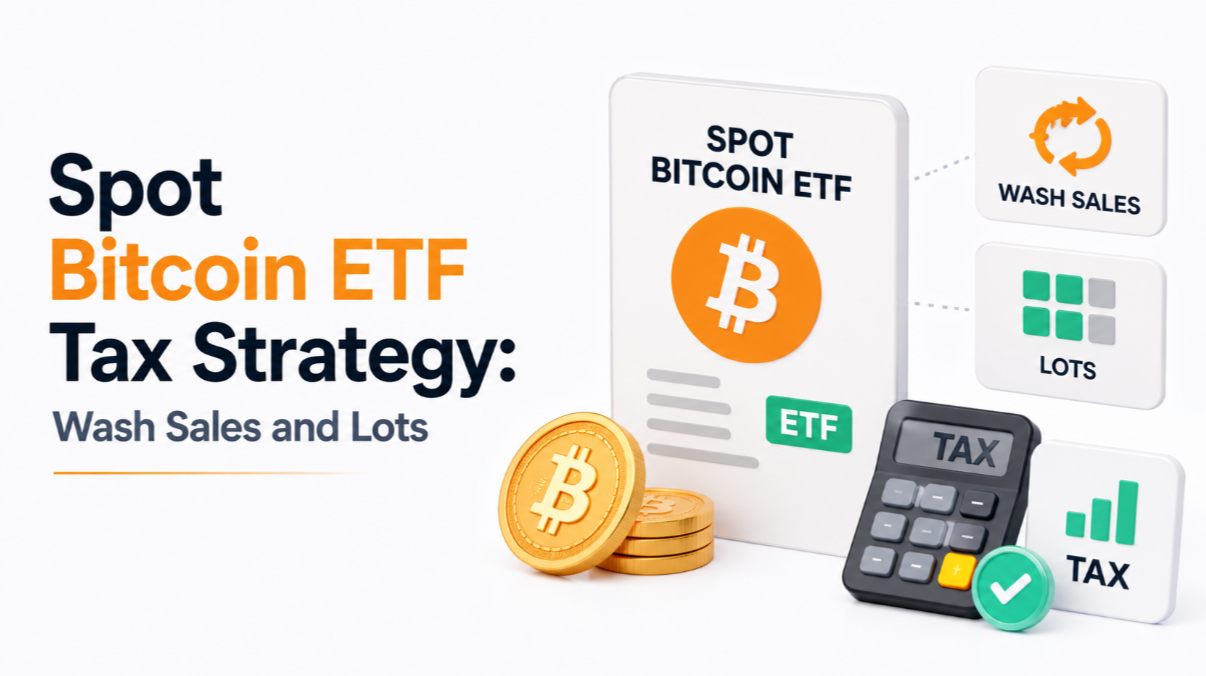
In the US (and most jurisdictions), you can choose which specific lot of crypto to sell. Selling the highest-cost lot first (HIFO) maximises losses or minimises gains in the current year. Most tax software (Koinly, CoinTracker, CoinLedger) supports specific ID; you must elect it before filing.
Long-term vs short-term holding
US long-term capital gains (held > 1 year) are taxed at 0%, 15%, or 20% depending on income — vs ordinary income rates (up to 37%) for short-term gains. Holding a year-plus before selling can cut your tax bill by 5–22 percentage points. Many other jurisdictions (Germany: 0% after 1 year; UK: simple rate but no holding-period benefit) have their own structures.
Wash sales — the 2026 picture
Wash sales (selling at a loss and rebuying within 30 days) historically did not apply to crypto in the US, allowing aggressive loss harvesting. The Build Back Better proposals included crypto wash-sale provisions that have been debated repeatedly; as of 2026, crypto wash-sale rules are not yet enacted at the federal level, but several states have begun applying analogous rules in audits. Treat the rule as imminent — it could be enacted at any time.
Tax-loss harvesting
- Identify positions with losses (current market price below cost basis).
- Sell to realise the loss.
- Repurchase the same or similar asset (still allowed at federal level in 2026).
- Offset capital gains in the same year; carry forward unused losses up to $3,000/year against ordinary income.
Jurisdiction strategies
- Germany — 0% capital gains tax after holding > 1 year.
- Portugal — Long historically friendly; 2023 reforms introduced gains tax on short-term holdings; long-term still favourable.
- Switzerland — Capital gains generally not taxed for private wealth holders.
- UAE — No personal income or capital gains tax.
- El Salvador — Bitcoin specifically tax-free.
Common mistakes that cost real money
- Selling without specific ID — defaulting to FIFO often realises gains at the worst time.
- Not harvesting losses in down years — losses carry forward and offset future gains.
- Crypto-to-crypto trades treated as if they were not taxable events.
- Forgetting that staking, lending, and airdrop rewards are usually ordinary income at receipt.
- Holding a position 11 months and 28 days then selling — wait the extra month for long-term treatment.
When professional help pays for itself
Above ~$100k in annual crypto activity, a crypto-experienced CPA usually saves more than they cost. Below that, modern tax software (Koinly, CoinTracker) handles 95% of cases.
See our crypto taxes 101 guide and tax software comparison.