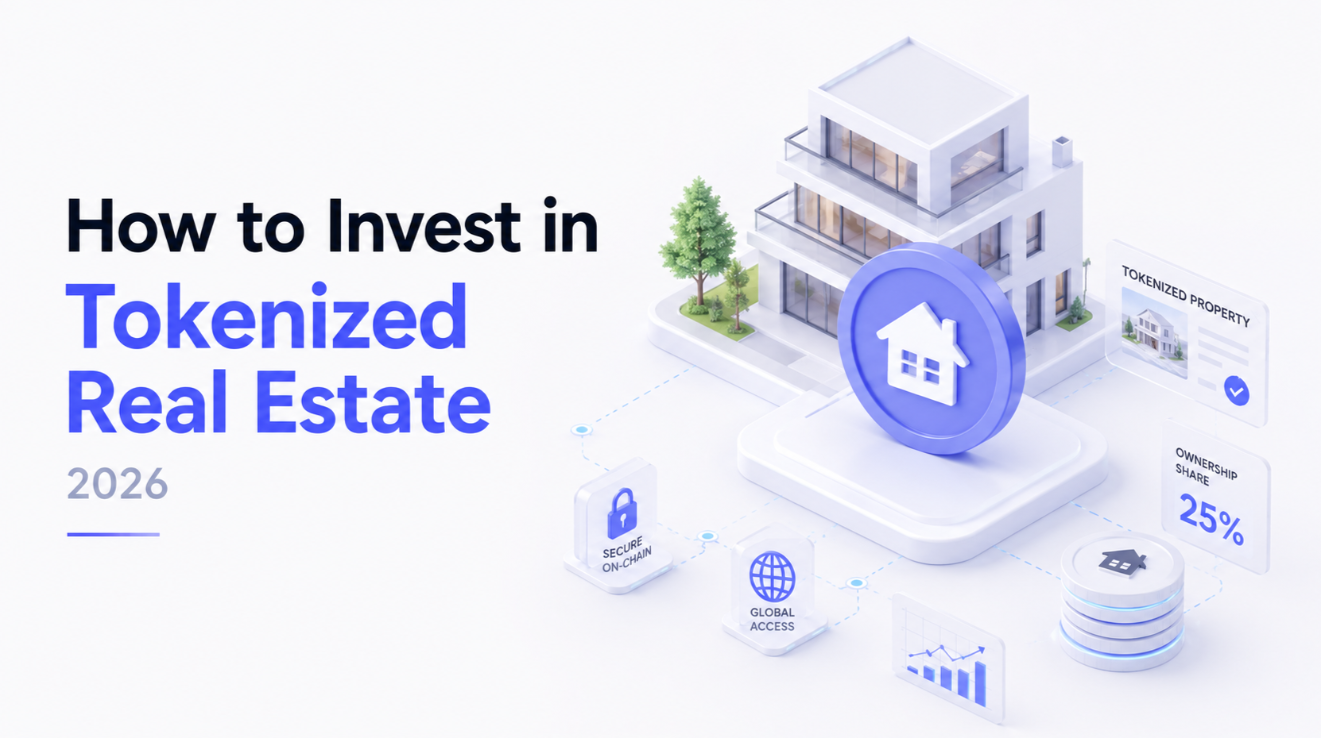
Tokenized real estate gives retail investors fractional exposure to rental properties without the down payment, mortgage, or management headaches. The 2026 market is small but functional — and very different from REITs.
The leading platforms
- RealT — US-based residential rental properties (Detroit, Cleveland, Chicago). Fractional ownership via tokens; rental income distributed weekly in USDC.
- Lofty — Similar to RealT, Algorand-based. Rental income paid daily.
- Backed RWA equities — Tokenized REITs and real-estate funds for broader exposure.
- Plume / Mantra — Compliance-focused RWA chains hosting commercial real estate deals.
How tokenized rental investing actually works
A property is acquired by a single-purpose vehicle (often a Delaware LLC). The LLC issues tokens representing ownership shares. Rental income flows to token holders proportionally. Property management is handled by the platform or a partner manager. You earn rent without dealing with tenants.
Typical 2026 returns
- Rental yield: 6–10% gross, 4–7% net after management and taxes.
- Capital appreciation: variable by market.
- Token liquidity: usually thin — secondary markets exist but are not deep.
Risks specific to tokenized real estate
- Illiquidity — Selling tokens often takes days or weeks at market prices.
- Property-specific risk — Vacancies, repairs, local market shifts.
- Platform risk — RealT or Lofty failure could complicate token holder recovery.
- Tax complexity — Rental income, depreciation, depending-on-jurisdiction treatment of token sales.
- Regulatory shifts — Real estate tokenisation sits in an evolving regulatory perimeter.
How it compares to REITs
A REIT offers diversification, liquidity, and regulatory clarity. Tokenized real estate offers single-property exposure, on-chain composability, and direct rental claims. REITs are usually better for first-time real estate investors; tokenized real estate appeals to investors wanting specific property exposure with crypto-native settlement.
See our RWA tokenization guide.