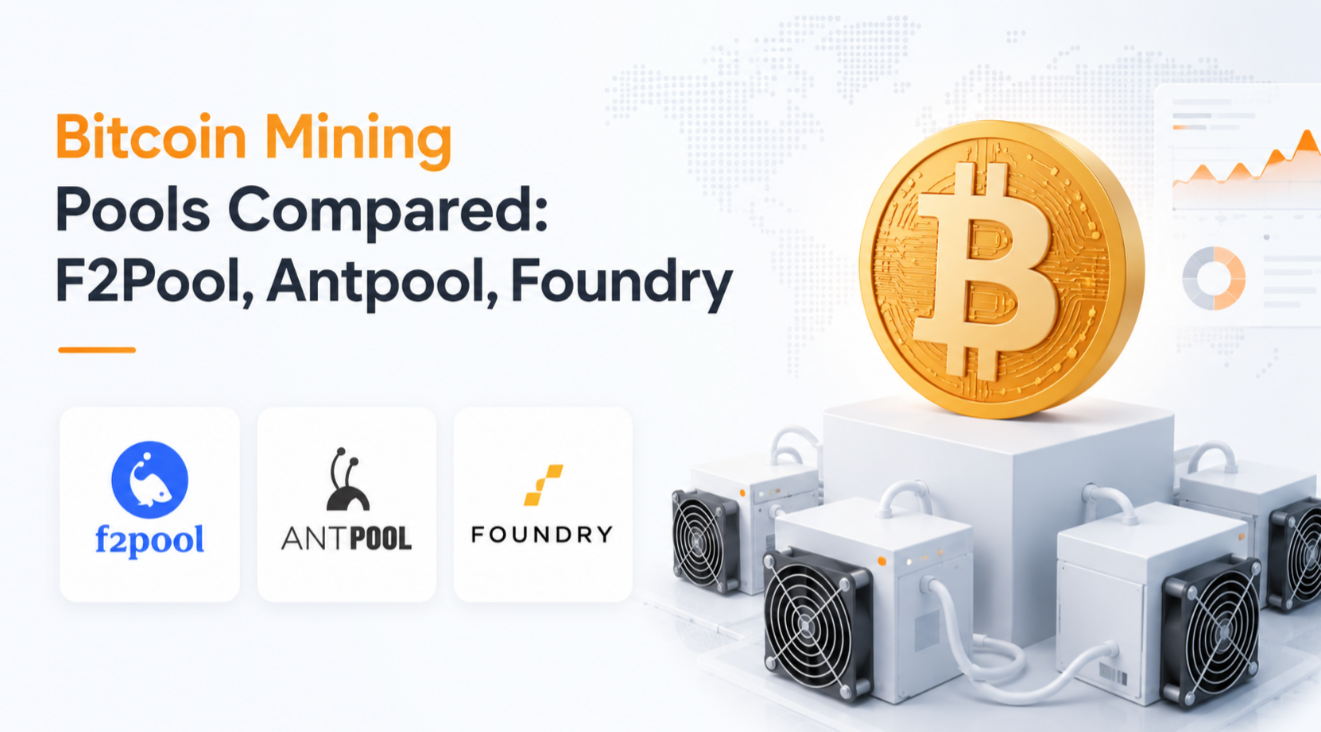
Solo Bitcoin mining is statistically dead — even the largest farms join a pool. In 2026, four pools dominate, controlling roughly 80% of the network's hashrate. Pool choice still matters for miners and signals risk to the network.
The pool landscape in 2026
- Foundry USA — ~28% hashrate. US-based, Digital Currency Group affiliate. Strong North American institutional miner clientele.
- AntPool — ~22%. Operated by Bitmain (the dominant ASIC manufacturer). Global reach, large Chinese hashrate concentration.
- F2Pool — ~14%. Hong Kong-based, oldest major pool still operating. Distributes globally; supports Bitcoin and Ethereum miners.
- ViaBTC — ~12%. Singapore-based; popular with mid-sized public miners. Owns CoinEx exchange.
- Braiins (Slush Pool) — ~3%. The original, now smaller but Stratum V2 pioneer; preferred by decentralisation-minded miners.
Payout methods that matter
- FPPS (Full Pay Per Share) — Pool absorbs variance; miners get predictable payouts. Standard for Foundry, AntPool, F2Pool.
- PPLNS (Pay Per Last N Shares) — Miners share the pool's actual rewards proportionally; higher variance, slightly higher EV. Preferred by smaller decentralisation-focused pools.
- Solo mining via pool — Pools like Solo CKPool let you mine "solo" with pool-level deduplication.
Fees and lockup
Standard fee in 2026 is 0.5–2.0% on FPPS pools, 0% on PPLNS pools (with no variance hedge). Payout thresholds are typically 0.005 BTC. KYC requirements vary — Foundry requires it for US miners; F2Pool and AntPool allow anonymous mining on smaller volumes.
The decentralisation problem
Foundry + AntPool together produce ~50% of all Bitcoin blocks. Technically that is a 51% concern, though both pools have committed to transparency and pool members can switch quickly. Stratum V2 (which lets miners choose their own block templates rather than the pool deciding) is the long-term answer; adoption is real but partial.
Picking a pool as a small miner
- Minimise centralisation: prefer Braiins, Ocean, or smaller pools when payouts are competitive.
- Compare effective fees (declared fee + variance impact for PPLNS).
- Verify the payout threshold against your monthly hashrate output.
- Check whether the pool supports Stratum V2.
- Geographically distribute if running a meaningful number of machines.
See our Bitcoin mining profitability guide and the home mining setup guide.