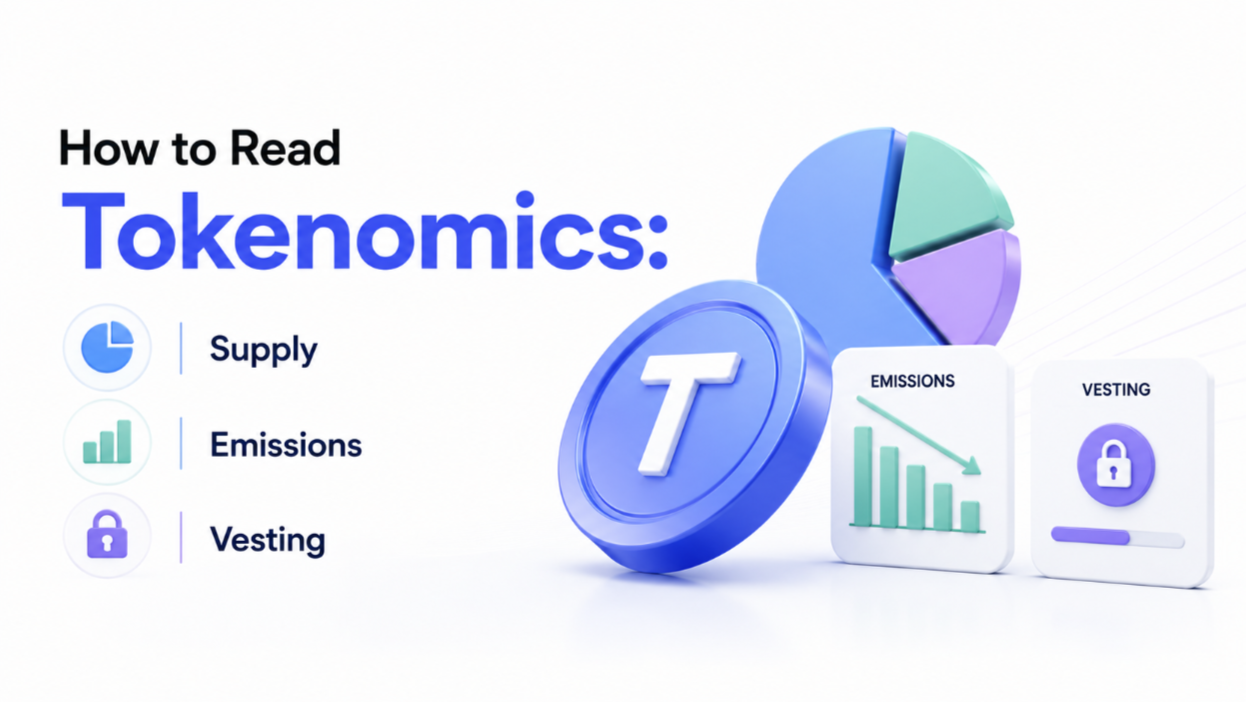
Tokenomics is the economic design of a token: how it is issued, who holds it, what it does, and how value flows. More crypto investments fail on tokenomics than on technology. Six questions answer 90% of what matters.
1. What is the maximum supply?
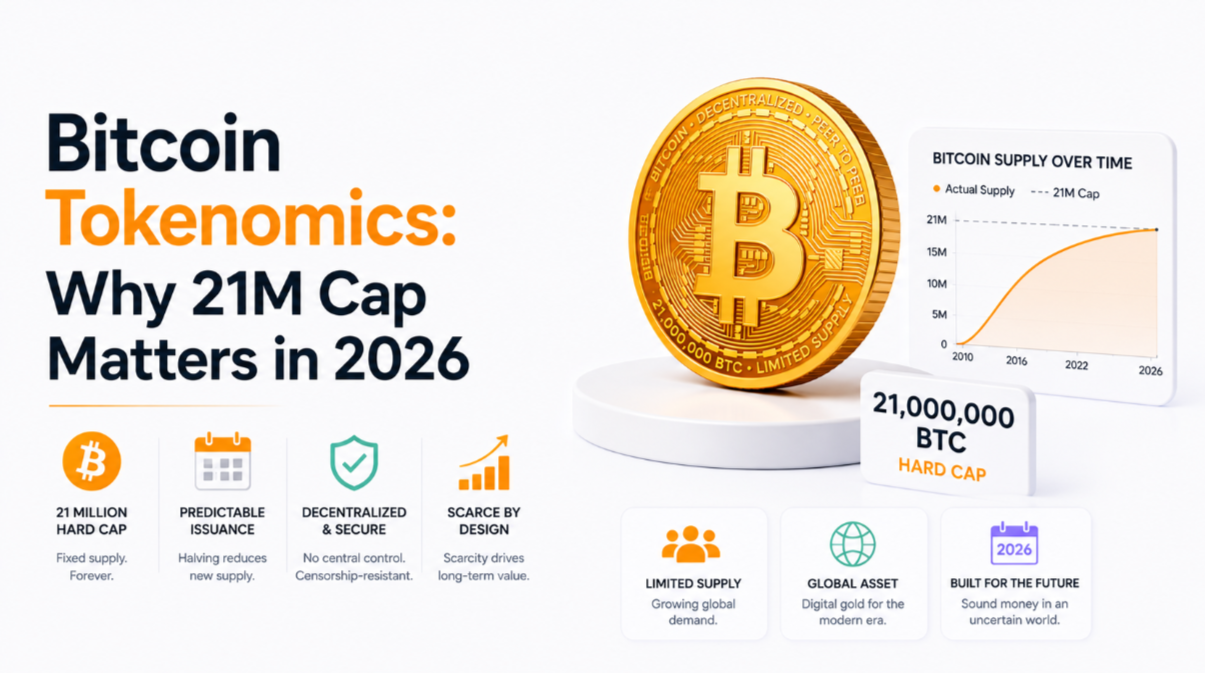
A fixed cap (Bitcoin: 21M) creates scarcity. An uncapped, inflationary supply (Ethereum, Solana) ties value to network usage instead. Neither is inherently better; what matters is whether the model matches the value-capture story.
2. What is the current circulating supply?
Circulating supply matters far more than fully diluted valuation (FDV). A token with $1B FDV and only 10% circulating has 90% more tokens flowing into the market over time. Compare circulating market cap with FDV — if FDV is 5–10× circulating cap, expect heavy emissions pressure.
3. What is the emission schedule?
Check the next 12 months: how many new tokens enter circulation? If emissions are 50% of current supply, demand needs to grow 50% just to keep price flat. Public emission schedules live in the protocol docs and on tokenomist.fun, Messari, and CoinGecko.
4. Who holds the tokens?
- Team allocation: 15–25% is normal; over 35% is concerning.
- Investor allocation: 15–30% is normal; check vesting cliffs.
- Treasury: 20–40% supports long-term development.
- Community / public sale: ideally 25%+ to start with meaningful decentralisation.
5. What are the vesting schedules?
A 12-month cliff followed by 36-month linear unlock is standard for team and investor allocations. Tokens with no cliff and short linear unlocks dump fast. Tokens released over 5+ years align long-term. Major unlock events often coincide with price drops.
6. What does the token actually do?
Value capture is the often-missing piece. Tokens with no fee accrual, no buybacks, no burns, and no protocol revenue capture are pure governance tokens — useful for voting but not as cash-flow assets. Tokens with revenue share (CRV, GMX, AAVE under stkAAVE) trade with different multiples than pure governance.
Red flags
- "Locked" liquidity that unlocks in days.
- Insider allocations above 50% with short vesting.
- Tokenomics revisions every few months ("flexible" = unstable).
- No clear use case for the token beyond speculation.
- Inflation rate above project growth.
For sector-specific applications, see our DePIN tokenomics guide and the AI crypto tokenomics deep-dive.