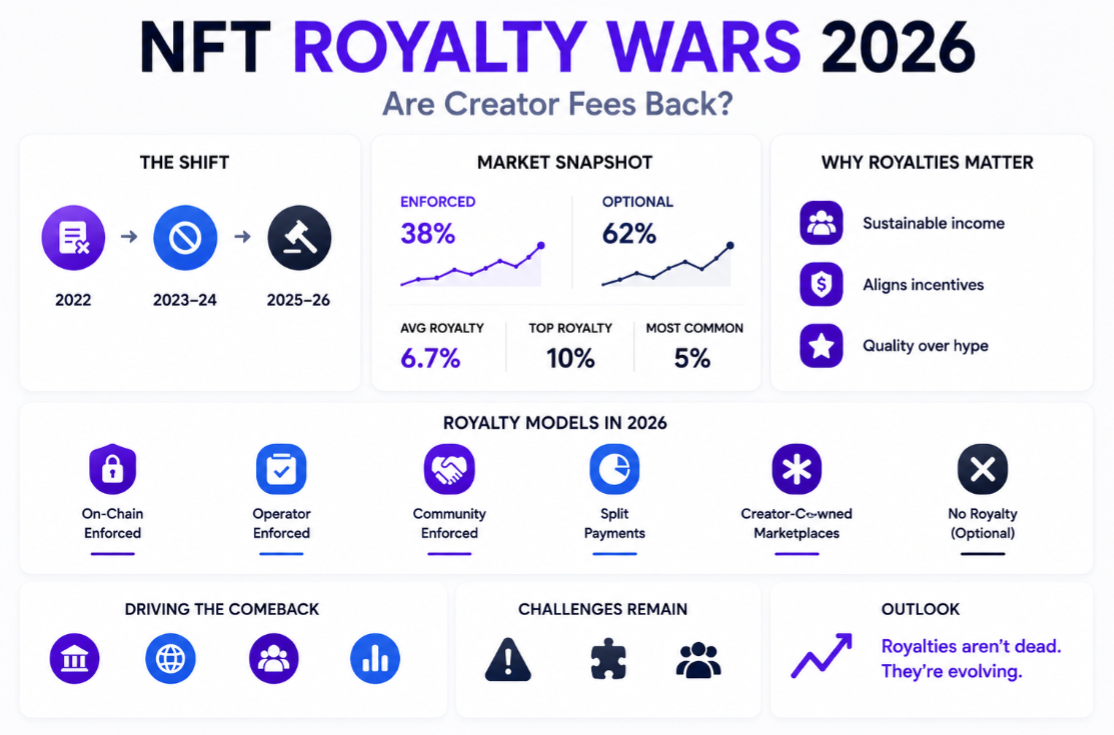
In 2022, Blur made NFT royalties optional. Other marketplaces followed. Creator earnings collapsed. In 2024–2025, the pendulum swung back — most major marketplaces re-introduced enforced royalties for new collections. Here is how it actually plays out in 2026.
Why royalties collapsed in 2022
Royalties were never enforced at the smart contract level on Ethereum NFTs — they relied on marketplace cooperation. When Blur entered with zero or optional royalties, traders rotated there. OpenSea and others matched. By mid-2023, default royalty payment rates fell below 30% across most collections.
The 2024–2025 reversal
Magic Eden re-enforced royalties for new collections on Solana via filter contracts and operator filters. OpenSea's OS2 relaunch (2024–2025) restored royalty enforcement on most new mints. Tensor leaned in early as a competitive differentiator. Blur compromised with minimum royalty floors but still gives sellers some flexibility.
Where things stand in 2026
- OpenSea — Enforced royalties for new collections; legacy collections variable.
- Magic Eden — Enforced on most new Solana and Ethereum collections.
- Tensor — Enforced; royalty floor mechanisms.
- Blur — Optional with minimum floors (typically 0.5%); used heavily by pro traders.
- OG Ethereum collections — Most CryptoPunks-era collections still see ~50% effective royalty payment.
What this means for creators
Royalty rates of 5–7% are standard for new collections. Effective payment rates are now 75–95% depending on collection and marketplace. Top creators (Pudgy Penguins, Doodles, Yuga Labs subsidiaries) earn meaningful ongoing revenue. Smaller creators benefit too — but most new collections still flop, royalty enforcement or not.
See our NFT marketplaces compared.