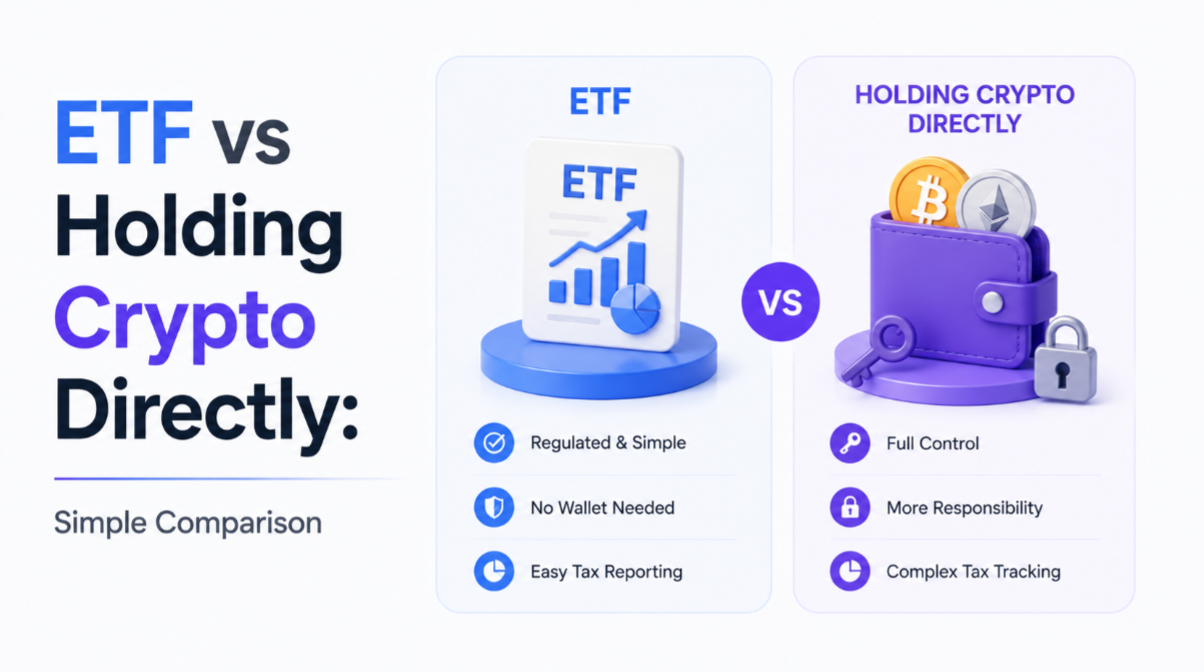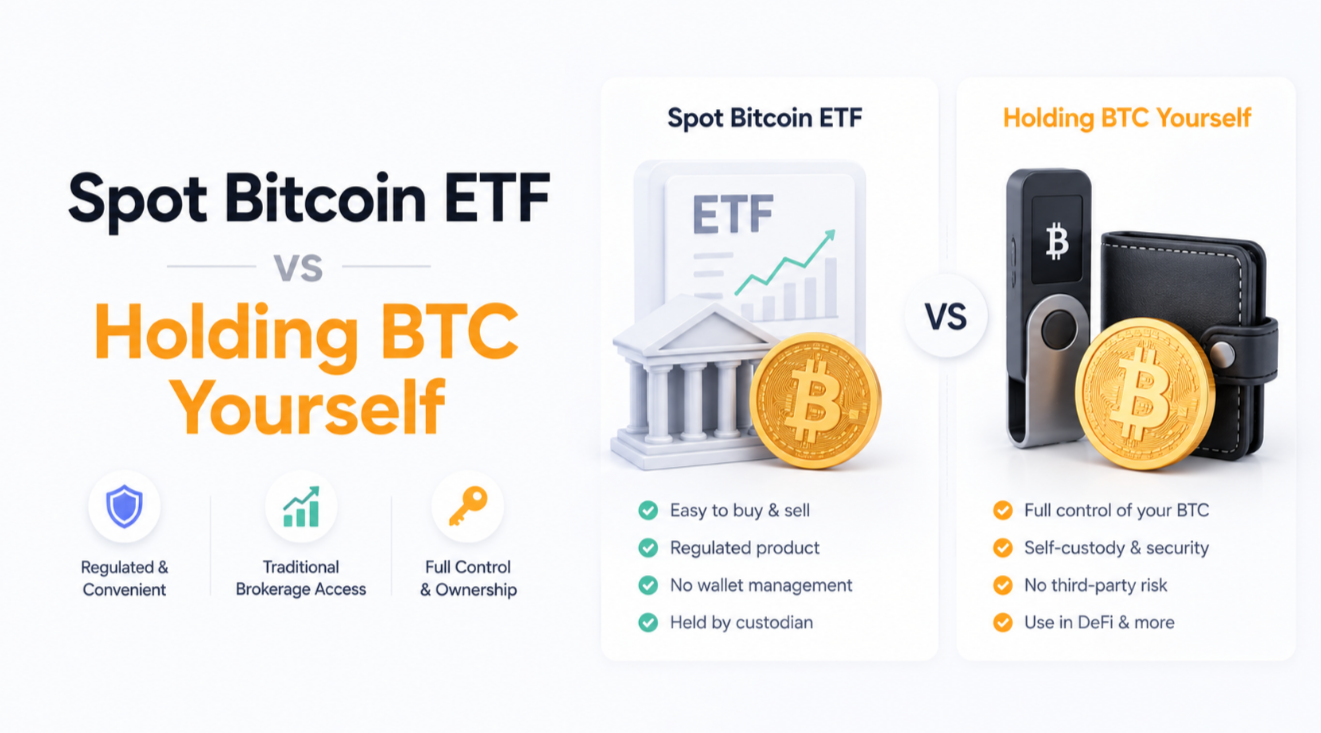
After two years of spot Bitcoin ETF trading, the choice between owning shares of IBIT, FBTC, BITB, or holding actual BTC is no longer about access — both are easy. It is about taxes, control, and how you use the asset.
What the ETFs actually are
Spot BTC ETFs hold real Bitcoin in custodied cold storage (Coinbase Custody mostly, with diversification at iShares and Fidelity). Each share represents ~0.000536 BTC. Expense ratios run 0.20–0.40%, with several issuers waiving fees for the first $5–10B in flows.
When the ETF wins
- IRAs and 401(k)s — Tax-advantaged accounts where holding actual BTC is impossible or difficult.
- Estate planning — Standard brokerage inheritance, no seed-phrase succession risk.
- Reduced operational risk — No phishing, no wallet drainers, no lost keys.
- Margin and options — Brokerage features like options chains, margin loans, and tax-loss harvesting at scale.
- Spousal access — Joint brokerage accounts work naturally; multisig wallets do not.
When self-custody wins
- Long-term hold with 0% spread — Buy on a low-fee exchange, withdraw, hold for years. No ongoing expense ratio.
- 24/7 settlement and movability — ETFs only trade during market hours; BTC moves at any time.
- Use as collateral in DeFi — WBTC, tBTC, and Lightning Network access require self-custody.
- Hedge against custodian failures — No third party between you and your coins.
- Privacy — Brokerage holdings are reported; on-chain self-custody is pseudonymous (with caveats).
The cost comparison over 10 years
For a $100k position: An ETF at 0.25% expense ratio costs $250/year, $2,500+ over 10 years. Self-custody costs a hardware wallet ($80–150) plus operational overhead. ETF wins on operational simplicity; self-custody wins on raw cost.
A hybrid approach most pros use
Hold ETFs in tax-advantaged accounts (IRAs) where you cannot easily own BTC directly. Hold actual BTC in taxable accounts where you want full control and can self-custody safely. Use the ETFs for tactical exposure (intraday rotation) and the BTC for long-term conviction.
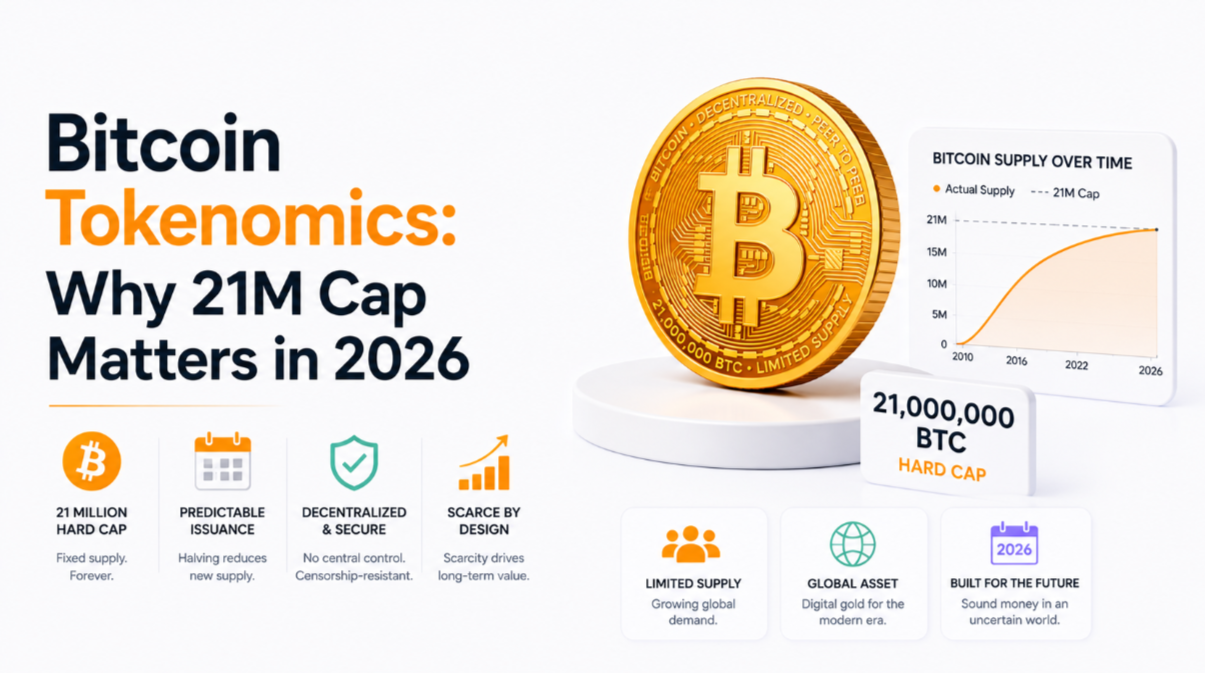
See our Bitcoin self-custody guide and our Bitcoin tokenomics deep-dive.