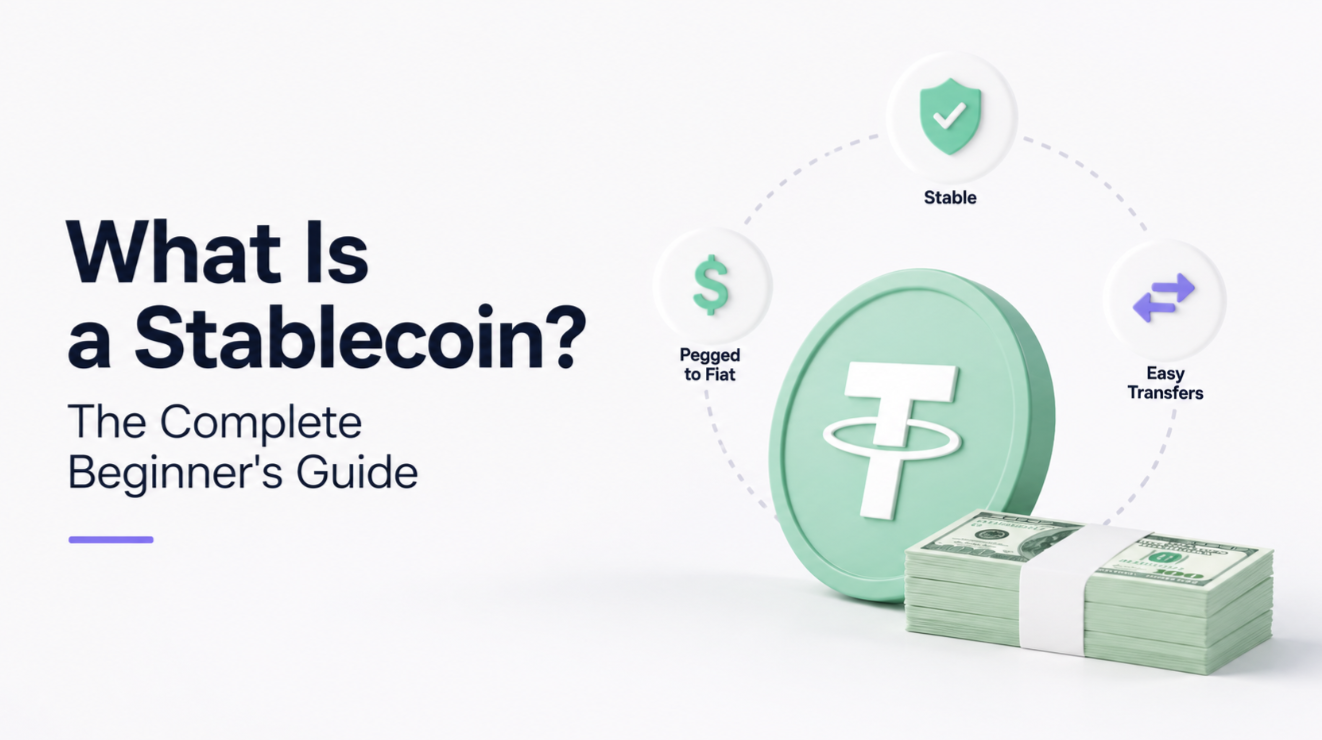
A stablecoin is a crypto token designed to track the price of another asset — usually the US dollar. They are the rails that move trillions of dollars per year between exchanges, DeFi protocols, and people, without the volatility of Bitcoin or Ether.
The three types of stablecoins
- Fiat-backed (USDT, USDC, USDP) — issuers hold real dollars and short-term US Treasuries 1:1.
- Crypto-collateralized (DAI, GHO, crvUSD) — over-collateralized with ETH, stETH, or RWA-backed assets.
- Algorithmic and hybrid (USDe, FRAX) — partially backed, partially stabilized by market mechanics.
Why people use stablecoins
Three reasons dominate: cross-border payments (cheap and instant compared to wires), trading collateral on exchanges, and earning yield in DeFi. In emerging markets, USDT-on-Tron is now a major dollar substitute, often beating local banking on speed and access.
Are stablecoins actually stable?
Mostly yes — the largest stablecoins trade within 0.1% of $1 in normal conditions. But they have failed before: Terra UST imploded in 2022, USDC depegged briefly in March 2023 after the Silicon Valley Bank collapse, and several smaller stablecoins have lost their peg permanently.
How to buy and hold stablecoins safely
- Buy USDC or USDT through a regulated exchange.
- Withdraw to a self-custodied wallet (MetaMask, Phantom, Rabby).
- For larger amounts, split between two stablecoin issuers to reduce concentration risk.
- Avoid holding on smaller, unregulated chains unless you understand the bridge risk.
Earning yield on stablecoins
In 2026, mainstream sources include Aave (around 4–7% USDC supply APY), Maker DSR (sDAI), tokenized Treasury products from Ondo and BlackRock BUIDL (4–5%), and yield-bearing dollar tokens like sUSDe. Higher APYs almost always carry higher risks — never chase double-digit yields without understanding where they come from.
Compare specific issuers in our Tether vs USDC vs DAI guide or read about yield-bearing stablecoin risks.